- Enterprise AI Executive
- Posts
- IBM: 1,000 CXOs on AI security
IBM: 1,000 CXOs on AI security
Plus, multi-agent AI, software CEO paths, and more.

Lewis Walker
March 25, 2026

Edition in partnership with

Welcome executives and professionals. Enterprise security is at a new breaking point as AI accelerates attack innovation and reshapes the threat landscape.
Since the previous edition, we have reviewed hundreds of the latest insights in agentic and generative AI, spanning best practices, case studies, market dynamics, and innovations.
This briefing outlines what is driving material value — and why it’s important.
In today’s briefing:
Securing enterprise AI at scale.
Moving multi-agent AI forward.
AI-native cloud infrastructure.
The two paths left for software.
Transformation and technology in the news.
Insights for Executive+ members.
Career opportunities & events.
Read time: 4 minutes.

MARKET & BEST PRACTICE INSIGHT

Image source: IBM
Brief: IBM, with Palo Alto Networks, published a 40-page report drawing on a survey of 1,000 C-level executives to examine how enterprises secure AI-driven operations and how AI itself is being deployed to strengthen security.
Breakdown:
Firms are rapidly embedding AI, expanding attack surfaces. 61% report AI models, data, or assets have already been compromised.
AI-powered threats are accelerating faster than defenses. Legacy security models cannot be retrofitted to address new AI-specific risks.
80% of leaders cite the need for stronger integration across hybrid cloud, AI, and security environments to support AI at scale.
A leading 24% are integrating AI across operations and security, supported by mature governance and exposure management.
Why it’s important: Achieving secure AI at scale requires new thinking and action on four fronts: Robust AI asset governance, an integrated AI-first operations and security environment, a mature AI exposure management posture, and a strategically aligned security ecosystem.
IN PARTNERSHIP WITH ELEVENLABS

Brief: ElevenAgents for Support is ElevenLabs’ dedicated platform for deploying AI voice agents in customer-facing support environments. It lets enterprises stand up a branded, multilingual, always-on support agent in days, not months.
Instead of routing customers through IVR menus, ElevenAgents:
Understands what customers actually need in natural speech.
Answers instantly using your knowledge base and SOPs.
Executes actions and escalates to humans when it matters.
Operates in 70+ languages 24/7 at sub-second latency.
Create an agent today. #ElevenAgentsPartner
BEST PRACTICE INSIGHT
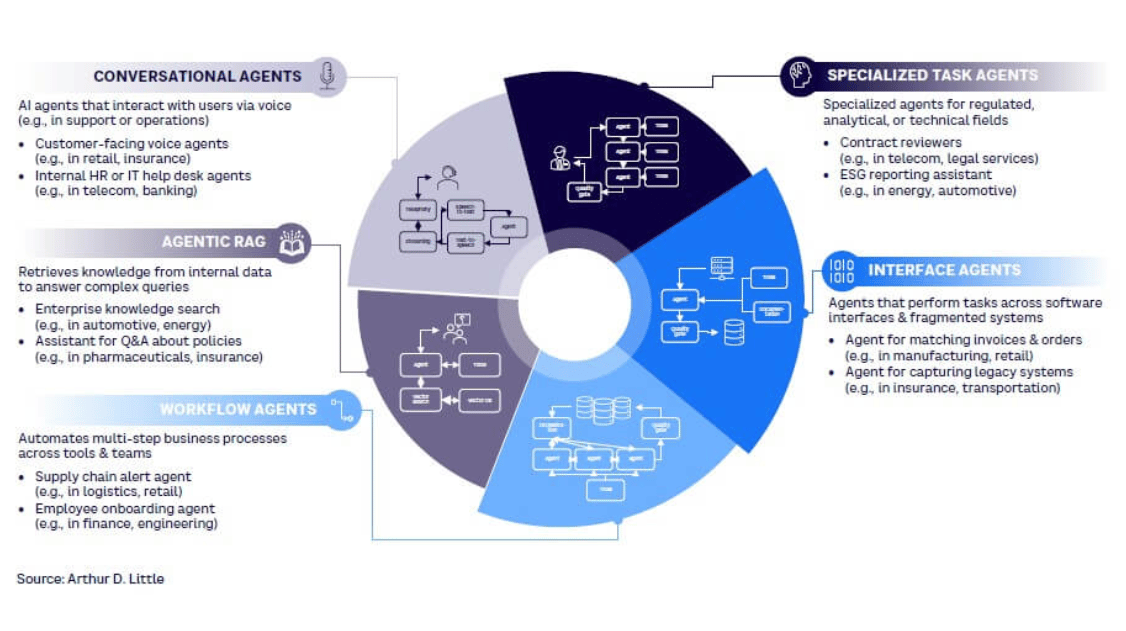
Image source: Arthur D. Little
Brief: Arthur D. Little outlined how enterprises can advance with multi-agent AI, leveraging a systems-based approach to unlock value while maintaining appropriate safeguards.
Breakdown:
Agentic AI is evolving rapidly, with systems that perceive, reason, act, and learn, structured around agent archetypes (image above).
Enterprises should act now, as multi-agent AI tech is sufficiently mature, builds on existing AI foundations, and can deliver ROI.
Implementation requires focus on data, processes, organisation, and governance. Arthur D. Little suggests the following three steps.
Map out processes that add the most value, embed agents into workflows and the operating model, and establish guardrails.
Why it’s important: Delaying multi-agent AI adoption risks slowing enterprise transformation. Progress is less about adding technology and more about accelerating operating models and change management to embed AI into processes and drive adoption.
BEST PRACTICE INSIGHT
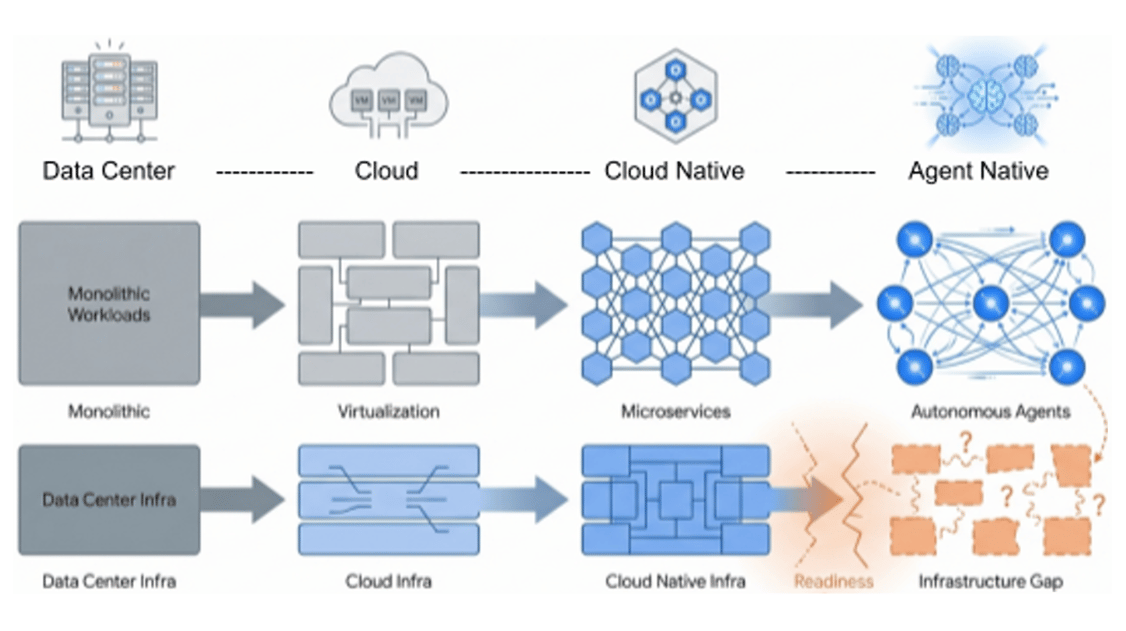
Image source: Google Cloud
Brief: Google Cloud published a 15-page paper outlining the requirements for agentic applications and standards needed to transform fragmented agent ecosystems into performant agent-native infrastructure.
Breakdown:
Agents are being developed at speed across fragmented frameworks, protocols, and environments, from cloud to local workstations.
This fragmentation creates non-deterministic complexity that traditional cloud-native architectures were not designed to handle.
Framework-specific governance becomes unscalable in environments where silos and incompatibilities constantly emerge.
Cloud infrastructure must evolve into an active layer that understands agents, embedding identity, discovery, and governance.
Why it’s important: Deploying agents effectively is now a core differentiator for enterprises. As firms move from pilots to production, they face escalating complexity driven by "agent sprawl." Without a coherent infrastructure layer, this fragmentation will limit scale, increase risk, and stall value realisation.
IN PARTNERSHIP WITH DEX
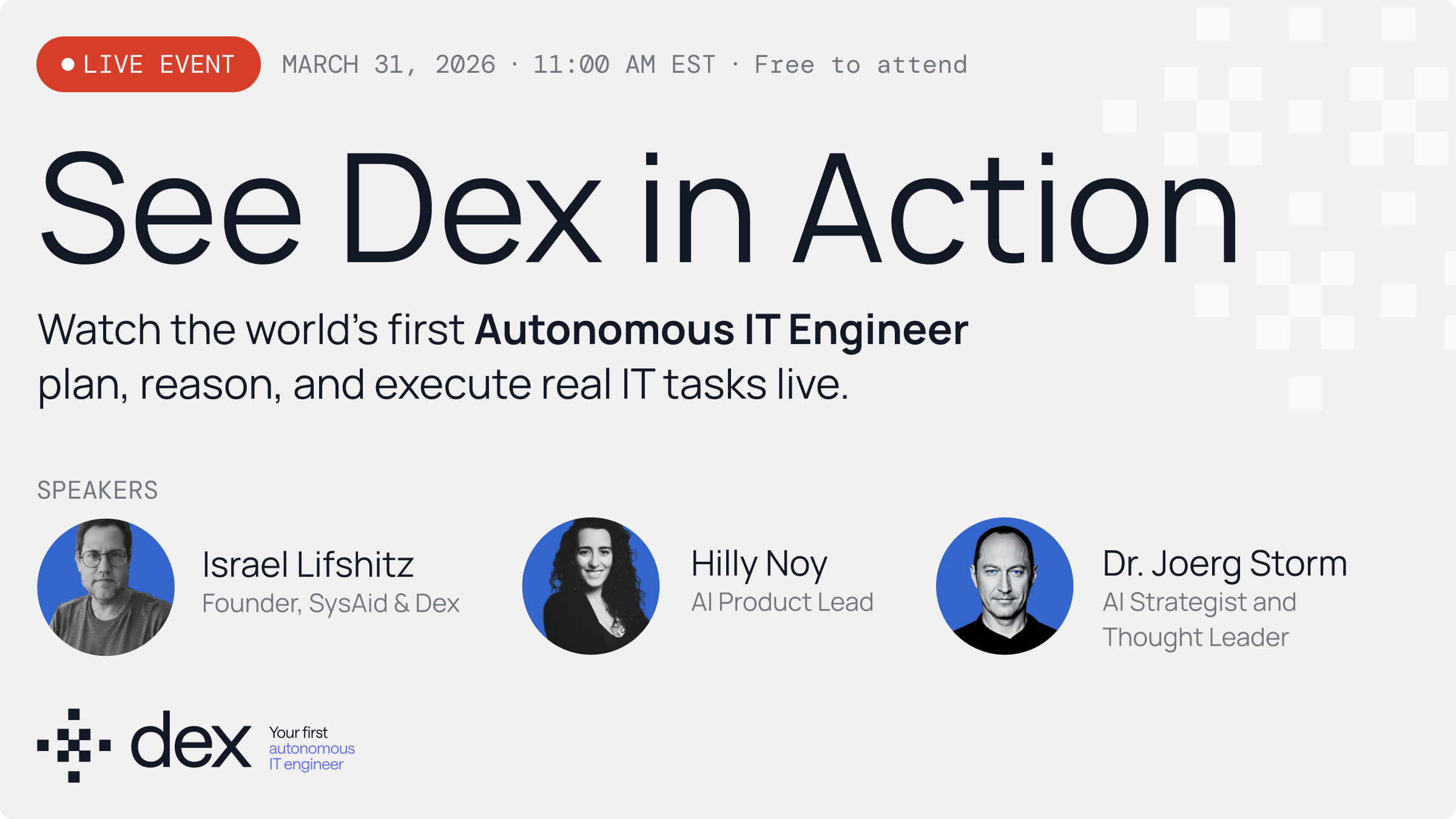
Brief: Dex doesn’t just assist IT; it investigates, plans, and executes tasks with controlled autonomy. Dex reasons through IT issues across your environment. Built by a team with rare depth behind technology trusted by 3,000+ firms and millions of users worldwide.
The Dex advantage:
Specialized AI agent built for complex, end-to-end IT tasks.
Resolve issues through plain-language conversations.
Maintain control: Approve all actions before execution.
Resolve 90% of IT issues before they become tickets.
See the first public demonstration of Dex on March 31.
SOFTWARE STRATEGY
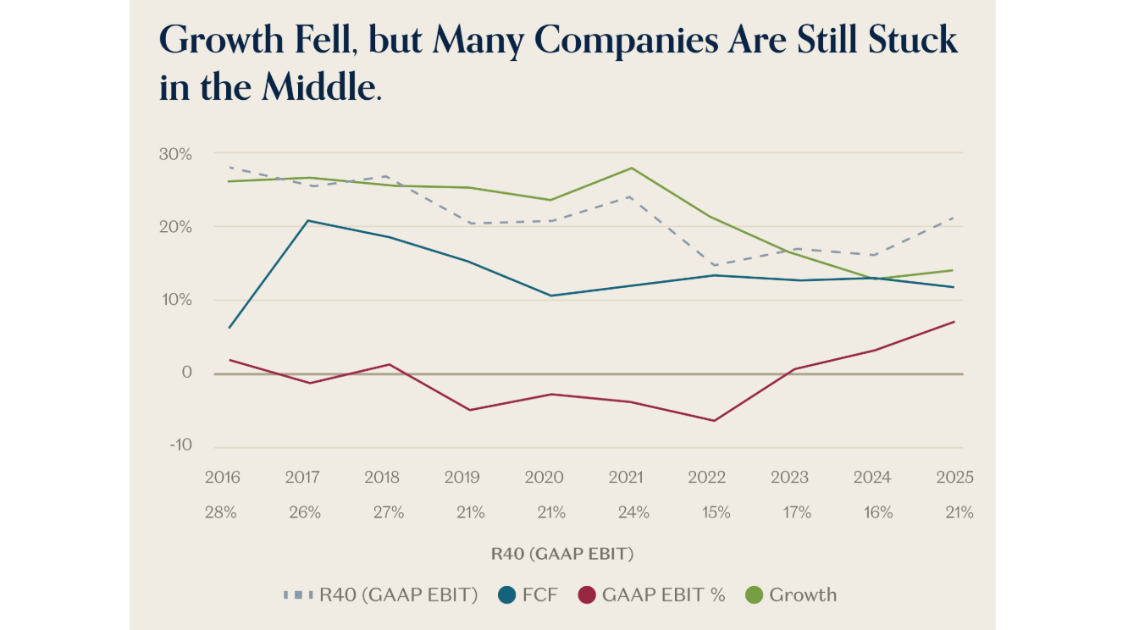
Image source: Andreessen Horowitz
Brief: Andreessen Horowitz (a16z) argued that software CEOs face two viable paths to durable equity value creation: reigniting growth through AI-native product innovation or rebuilding for structurally higher profitability.
Breakdown:
Public software is facing slowing growth and compressed valuations, yet in most cases, true profitability has still not arrived.
The time for decisive action is now. Over the next 12-18 months, a16z says software CEOs face two paths to rebuild their companies.
Path one is to accelerate revenue growth by 10+ percentage points year over year through genuinely new AI-native products.
Path two is to rebuild for 40-50%+ operating margins, flattening management layers, minimising bespoke services, and more.
Why it’s important: a16z believes software companies should prioritise one path. By the end of next year, anything between high growth and high profitability risks becoming no-man’s land, defined by growth pressure, persistent dilution, and multiple compression.

BCG noted the agentic future is uncertain, but four marketing scenarios, open bazaar, data-driven brands, super-apps, and creator-led authenticity, are likely.
Salesforce outlined eight design principles for the agentic enterprise, along with five steps to successfully deploy an organization’s first AI agent.
McKinsey explored how agentic AI is exposing enterprises to new cybersecurity risks, creating opportunities for providers to secure systems.
BCG outlined how AI can transform corporate communications, but finds most chief communications officers are struggling to fully capture its value.
Deloitte explained how agentic AI is reshaping analytics, with guidance and three strategic moves for compliance leaders navigating emerging risks.
Roche launched an AI factory to accelerate drug discovery and manufacturing, now running on 3,500+ Nvidia Blackwell GPUs.

Cursor disclosed its Composer 2 model is built on Kimi K2.5, following criticism for not initially revealing the underlying model in its launch.
Anthropic released a preview letting Claude control your desktop, with phone-based task assignment through Dispatch.
The White House issued an AI policy blueprint seeking to limit state-level AI laws while maintaining federal oversight across existing agencies.
Elon Musk unveiled Terafab, a Tesla–SpaceX–xAI chip facility targeting a terawatt of AI compute annually, ~50x what the entire world outputs today.
OpenAI plans to expand its workforce from 4,500 to 8,000 by the end of 2026 amid the company’s increasing enterprise AI focus.
Anthropic rolled out Projects in Claude Cowork, allowing users to import their existing web-based Claude projects or create them on the desktop app.

Unlock Executive AI Index: The top 209 AI playbooks, by industry and function, with direct links to each. Updated weekly.
Get the extended version of Enterprise AI Executive, delivered twice weekly.

CAREER OPPORTUNITIES
USPTO - Chief AI Officer
Atos - Head of AI
NTT Data - AI GTM Lead
EVENTS
HumanX - April 6-9, 2026
Microsoft 365 Community Conference - April 21-23, 2026
Anthropic Code w/ Claude - May 6, 2026

Reach enterprise AI decision-makers:
66% of readers are C-level executives or VP and Director-level leaders.
63.2% of the audience is based in the U.S., EU, UK, ANZ, and Singapore.
Read by leaders at Microsoft, Deloitte, the Fortune 500, and more.
Guaranteed impression and custom sponsorship packages available, with post-send performance reporting.

Conceived as a practical communication for executives Lewis Walker has worked with, this briefing has become a trusted resource for thousands of senior decision-makers shaping the future of enterprise AI.
We welcome your feedback.

Lewis Walker, Editor