- Enterprise AI Executive
- Posts
- Deloitte China's physical AI playbook
Deloitte China's physical AI playbook
Plus, AI cloud strategies, talent reinvention, and more.

Lewis Walker
March 22, 2026

Edition in partnership with

Welcome executives and professionals. As with any rapidly evolving technology, many of physical AI’s implications are still to play out. Even so, increasingly structured pathways are emerging for the journey ahead.
Since the previous edition, we have reviewed hundreds of the latest insights in agentic and generative AI, spanning best practices, case studies, market dynamics, and innovations.
This briefing outlines what is driving material value — and why it’s important.
Go beyond the brief with Executive+
Unlock Executive AI Index: The top 209 AI playbooks, by industry and function, with direct links to each. Updated weekly.
Get the extended version of Enterprise AI Executive, delivered twice weekly.
In today’s briefing:
Physical AI’s moment of acceleration.
Reinventing talent for the AI era.
AI-ready cloud strategies.
Outpacing AI-driven attacks.
Transformation and technology in the news.
Insights for Executive+ members.
Career opportunities & events.
Read time: 4 minutes.

BEST PRACTICE INSIGHT
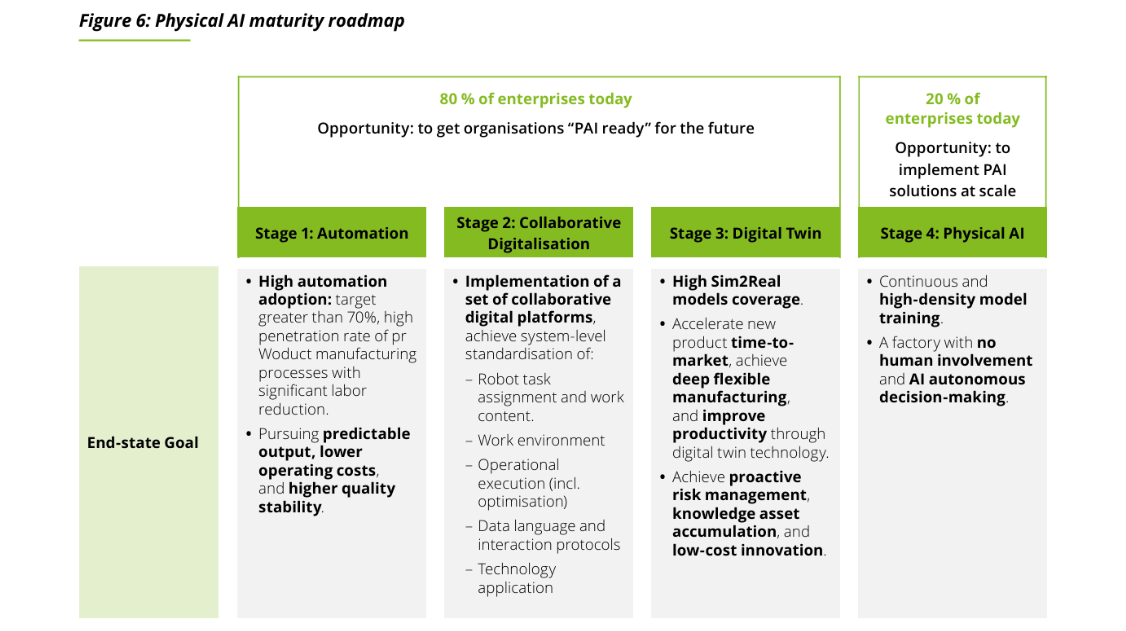
Image source: Deloitte
Brief: Deloitte China published a 13-page paper outlining a practical framework for leaders adopting Physical AI (PAI): where to start, how to sequence investment, and which organisational foundations are required to enable value.
Breakdown:
PAI’s shift to commercial reality is driven by converging advances, including lower multimodal sensor costs and a 60% gain in precision.
BYD’s Xi’an robotic factory runs at ~97% automation, with AI-guided robots and autonomous mobile robots.
The evolution from rigid machinery to truly autonomous, adaptive physical systems follows four maturity stages (image above).
The paper also details the PAI technology stack, a three-layer value model, and questions every leader should be asking now.
Why it’s important: PAI is no longer a question of if or when, but readiness. With 41% of leaders expecting transformational impact within three years and adoption forecast to grow sixfold in two, the window to establish the right operational and technical foundations is rapidly narrowing.
IN PARTNERSHIP WITH RESOLVE
Brief: ITSM platforms struggle to support modern, cross-domain orchestration. As tickets and approvals slow resolution, IT teams hit scale limits. Resolve introduces agentic AI to bridge the gap through real-time, autonomous incident resolution.
Join Resolve on April 1 for a breakdown of:
Why traditional ITSM orchestration fails to support modern operations.
How agentic AI enable autonomous resolution.
The future of resolution beyond ticket-driven workflows.
Register now to save your spot.
BEST PRACTICE INSIGHT
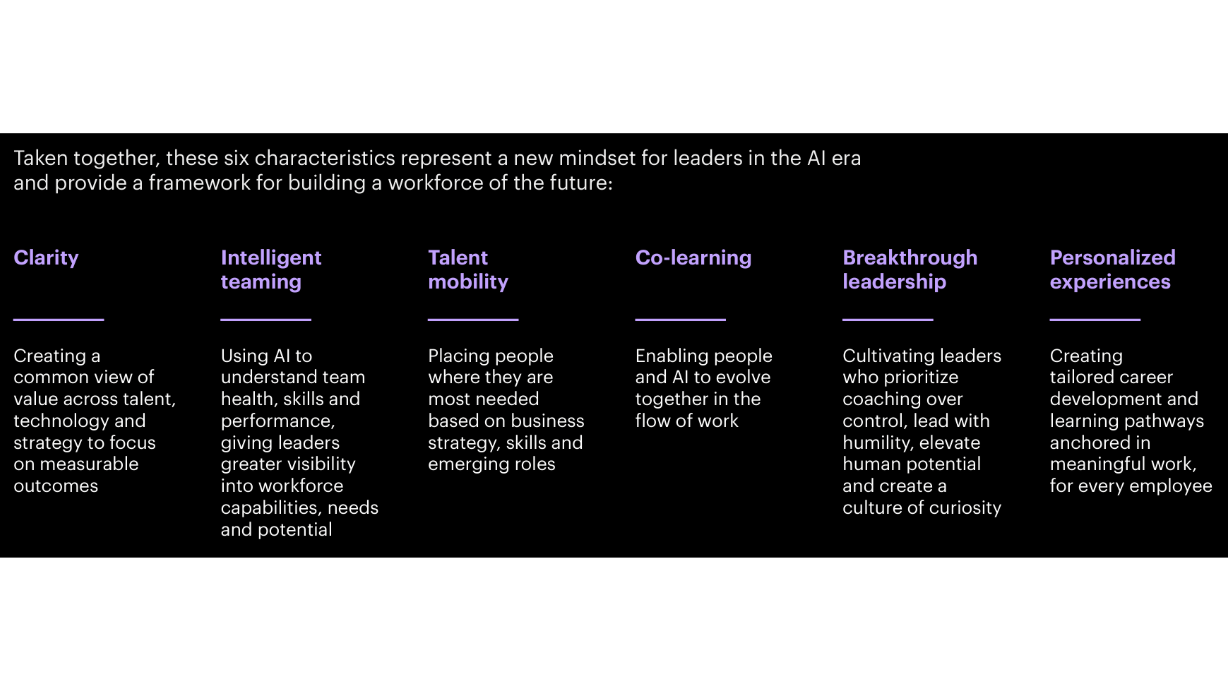
Image source: Accenture
Brief: Accenture published a 54-slide report drawing on surveys of 1,320 C-suite executives and 4,560 employees, identifying an elite 18% of organisations, “Talent Reinventors,” that take a distinct approach to talent.
Breakdown:
Talent Reinventors outperform peers, delivering 1.4% higher profit growth and being 7x more likely to strengthen organisational culture.
The differentiator is an integrated human–AI talent strategy built on six workforce characteristics that shape how talent evolves (image above).
While most firms show strength in select areas, Talent Reinventors stand out by unifying all six characteristics into a cohesive system.
The report highlights real-world success, with case studies from Volkswagen, Microsoft, Caterpillar, Merck, and BASF Group.
Why it’s important: Organizations that find the right balance between humans and AI will attract and retain the best talent and continue to outpace their peers. Firms will tell you it takes effort to reinvent your talent strategy, but the gains are impossible to ignore.
BEST PRACTICE INSIGHT
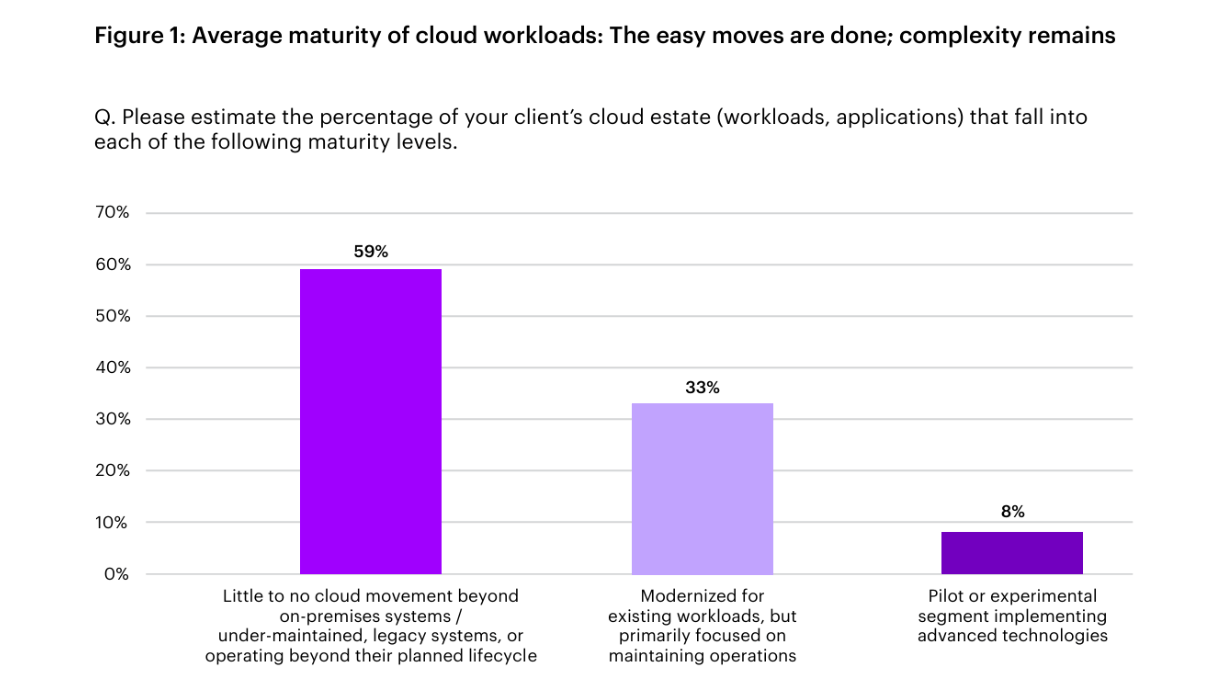
Image source: Accenture
Brief: Accenture published a 34-slide report on how AI is redefining the role of cloud as the foundation for enterprise advantage, outlining “no-regret moves” firms should take now to ensure their cloud environments are AI-ready.
Breakdown:
Many firms treat cloud transformation as complete once scalability, resilience, and uptime targets are met and signed off.
In reality, there is more cloud ahead than behind, as AI accelerates across generative, agentic, and physical domains.
Accenture finds 59% of workloads remain on-premises or in ageing systems, with only 8% dedicated to advanced tech.
The report outlines strategies (stabilizers, optimizers, innovators) to progress toward the level of cloud maturity that allows for AI reinvention.
Why it’s important: Scaling AI requires a resilient, adaptable digital core with cloud at its centre. Rather than a single destination, cloud now spans public, private, hybrid, multi-cloud, sovereign, and edge environments, where workload placement is driven by latency, regulation, risk, and cost.
MARKET INSIGHT
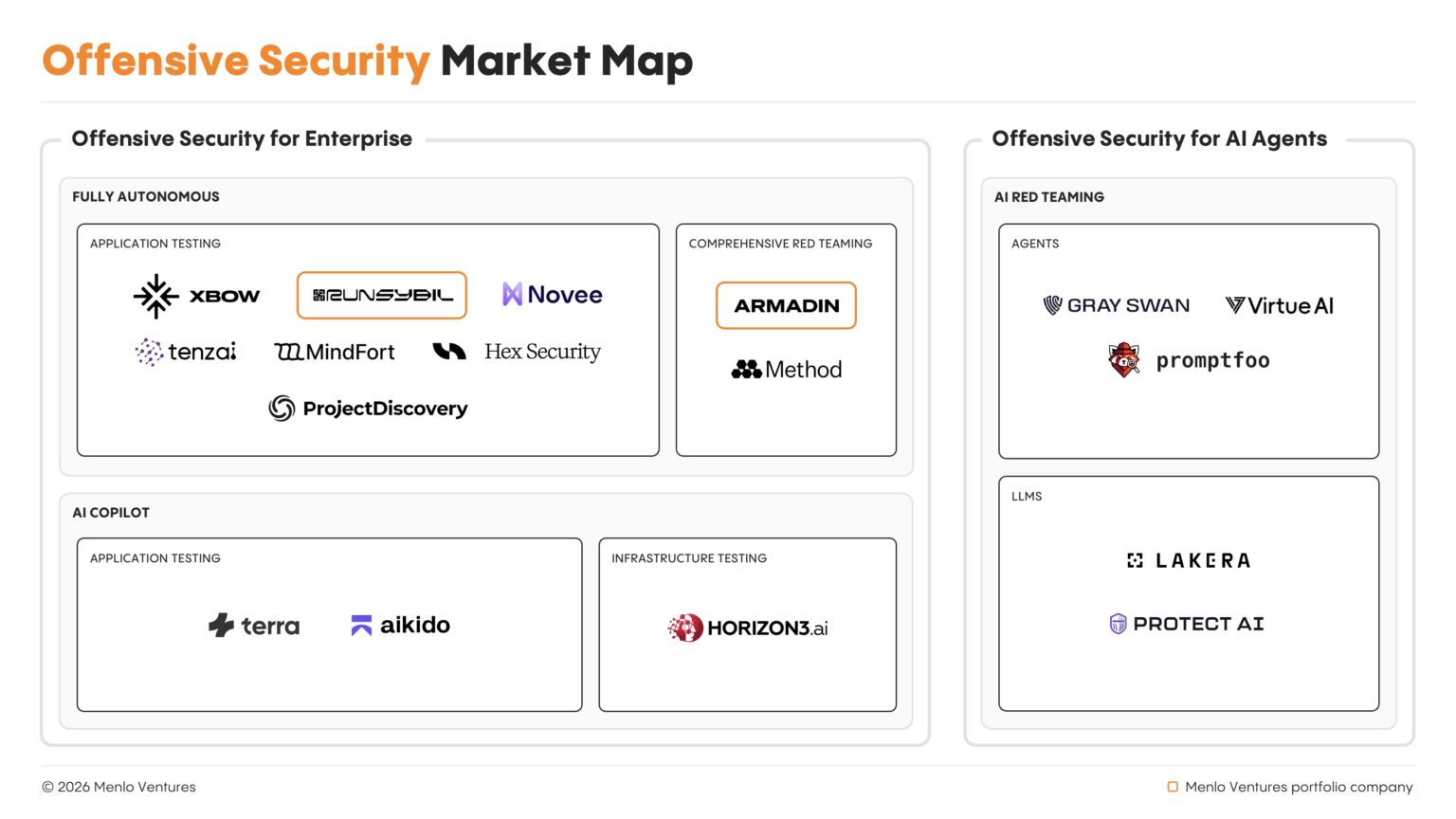
Image source: Menlo Ventures
Brief: Menlo Ventures outlined how autonomous cyberattacks are accelerating the need for AI agent security systems that match the speed, scale, and sophistication of increasingly autonomous threats.
Breakdown:
Autonomous cyberattacks have entered real-world use, with Anthropic disrupting a “90% autonomous” espionage campaign.
The gap between AI and human attackers has reversed, with systems now operating autonomously across the full attack chain.
AI phishing now outperforms humans by 24%, a 42-point swing in two years; offensive AI extends far beyond faster pentesting.
These gains are driving new AI-native security firms, spanning enterprise infrastructure protection and securing AI models.
Why it’s important: The opportunity extends beyond traditional pentesting into a broader offensive security market spanning bug bounties, red teaming, and consulting. As AI lowers the cost of continuous testing, organisations can move from limited coverage to near-total validation.

Forrester’s CEO shared views on the rise of private AI models, predicting 70% of AI-driven revenue will come from private deployments.
Bain published insights from Nvidia GTC 2026, outlining how leaders are not just deploying AI, but rebuilding operating models around it.
McKinsey shared insights on reimagining learning for the AI age, noting leading firms will not just automate faster, but also learn faster.
OpenAI published a 28-page report on ChatGPT and the price of work, finding nearly 3M daily US prompts relate to wages, pay, or earnings insights.
Accenture launched a Microsoft forward deployed engineering practice and completed its acquisition of Faculty.
Anthropic released a large-scale study using Claude to interview 81K users across 159 countries on AI’s future and associated concerns.

Anysphere, maker of Cursor, released Composer 2, a third-gen model rivaling OpenAI and Anthropic coding systems at far lower cost per task.
Google upgraded AI Studio into a unified vibe-coding builder, combining its Antigravity agent with integrated backends and user authentication.
OpenAI acquired open-source developer tools startup Astral, integrating its team into Codex to accelerate development of AI coding capabilities.
Microsoft is reportedly weighing legal action against Amazon and OpenAI over a $50B cloud deal that may breach its exclusive Azure hosting terms.
The U.S. Department of War filed a 40-page rebuttal to Anthropic, claiming its safety limits pose unacceptable risks in wartime scenarios.
Google overhauled Stitch into a voice-enabled infinite canvas, turning ideas into prototypes and introducing “vibe design” as a new workflow.

Unlock Executive AI Index: The top 209 AI playbooks, by industry and function, with direct links to each. Updated weekly.
Get the extended version of Enterprise AI Executive, delivered twice weekly.

CAREER OPPORTUNITIES
OpenAI - Head of AI Executive Partnership
Google Cloud - Head of AI GTM
Deloitte - AI Specialist Leader, SFL Scientific
EVENTS
MIT AI Conference - April 14, 2026
Adobe Summit - April 20-22, 2026
Snowflake - The Agentic Enterprise - June 9, 2026

Reach enterprise AI decision-makers:
66% of readers are C-level executives or VP and Director-level leaders.
63.2% of the audience is based in the U.S., EU, UK, ANZ, and Singapore.
Read by leaders at Microsoft, Deloitte, the Fortune 500, and more.
Guaranteed impression and custom sponsorship packages available, with post-send performance reporting.

Conceived as a practical communication for executives Lewis Walker has worked with, this briefing has become a trusted resource for thousands of senior decision-makers shaping the future of enterprise AI.
We welcome your feedback.

Lewis Walker, Editor