- Enterprise AI Executive
- Posts
- What 2,000 CEOs reveal about AI
What 2,000 CEOs reveal about AI
Plus, BCG CEOs and boards survey, AI-first enterprise, and more.

Lewis Walker
May 06, 2026

Edition in partnership with

Welcome executives and professionals. Artificial intelligence is not another cycle of change. It is a structural shift in how organizations think, decide, and compete.
Since the previous edition, we have reviewed hundreds of the latest insights in agentic and generative AI, spanning best practices, case studies, market dynamics, and innovations.
This briefing outlines what is driving material value — and why it’s important.
In today’s briefing:
What 2000 CEOs reveal about AI.
The BCG CEOs and boards survey.
The AI-first enterprise.
How to analyze contracts with Claude.
A defining moment for CHROs.
Transformation and technology in the news.
Insights for Executive+ members.
Career opportunities & events.
Read time: 4 minutes.

CEO INSIGHT
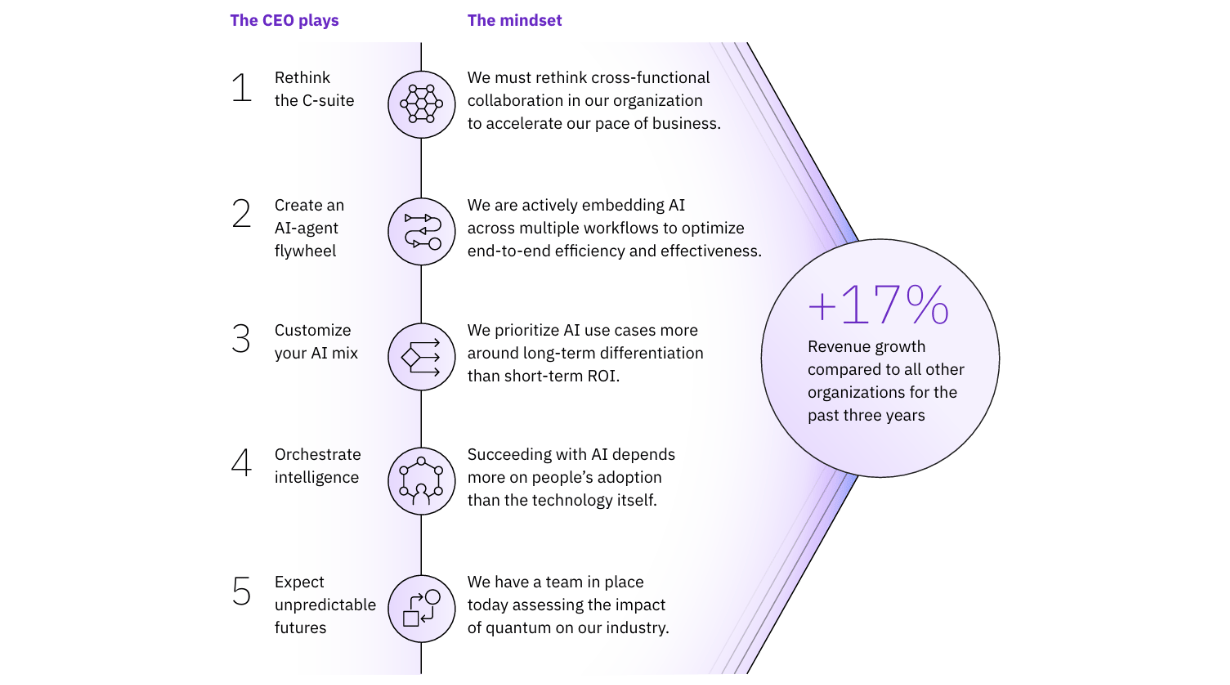
Image source: IBM
Brief: IBM’s annual CEO study of 2,000 leaders found that as AI becomes more pervasive in the enterprise, CEOs face rising pressure to rethink how leadership teams operate, decisions are made, and organizations are structured.
Breakdown:
76% of firms have a CAIO in 2026, up from 26% in 2025, while 64% of CEOs are comfortable making major strategic decisions based on AI.
CEOs who are remaking the C-suite with an AI-first mindset have scaled 10% more AI initiatives enterprise-wide than peers.
83% of CEOs say AI sovereignty is essential to strategy, underscoring the importance of having the right controls.
Despite 86% of CEOs believing employees have the skills to work with AI, only 25% of the workforce is using it regularly.
Why it’s important: The CEO’s role has always involved leading through disruption, but AI increases both the speed and impact of decisions. Winning organizations will operate AI-first, not as a layer of technology, but as a new operating model. Faster decision cycles, fewer silos, and rapid execution.
IN PARTNERSHIP WITH DEX

Brief: Following the launch of the world’s first autonomous IT engineer, the Dex team is now introducing an opportunity for IT leaders to Put Dex to Work, a hands-on program designed for real environments, not demos.
The Dex advantage:
Executes IT tasks across platforms like M365 and Google Workspace
Meets users where they already work in Microsoft Teams or Slack
Handles everything from slow computers to complex, multi-step requests
Resolves up to 90% of issues before they ever become a ticket
Exclusive pilot offer:
3 months unlimited use to automate your operations at scale.
Dedicated onboarding engineer to ensure seamless integration.
Click Put Dex to Work to learn more.
CEO & BOARD INSIGHT
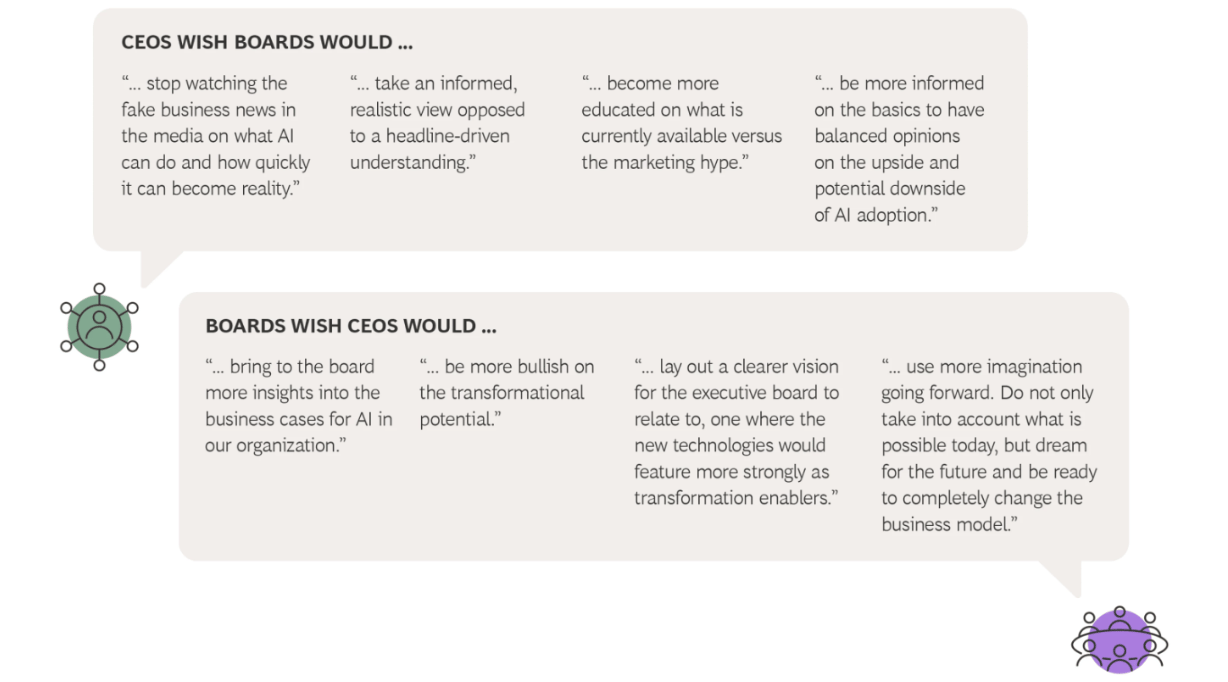
Image source: Boston Consulting Group
Brief: BCG’s inaugural Split Decisions survey of 351 CEOs and 274 board members from companies with over $100M in revenue shows growing misalignment between leadership teams and boards on AI strategy.
Breakdown:
Over half of CEOs say boards need a clearer view of the AI hype-reality gap, with 35% believing boards overestimate what AI can replace.
Boards feel CEOs need to do a better job selling them on their AI strategy, emphasizing the need for more proactive communication.
60% of CEOs believe boards are too impatient with the pace of AI transformation, underestimating complexity.
40% of board members who describe themselves as less AI-savvy than peers worry their organization is not adopting AI fast enough.
Why it’s important: At first glance, CEOs and boards appear to agree on how AI should be governed, implemented, and valued. Look closer, however, and you’ll see critical gaps. At a moment when clear, coordinated leadership is essential, these fault lines could create tension in the boardroom.
MARKET & BEST PRACTICE INSIGHT
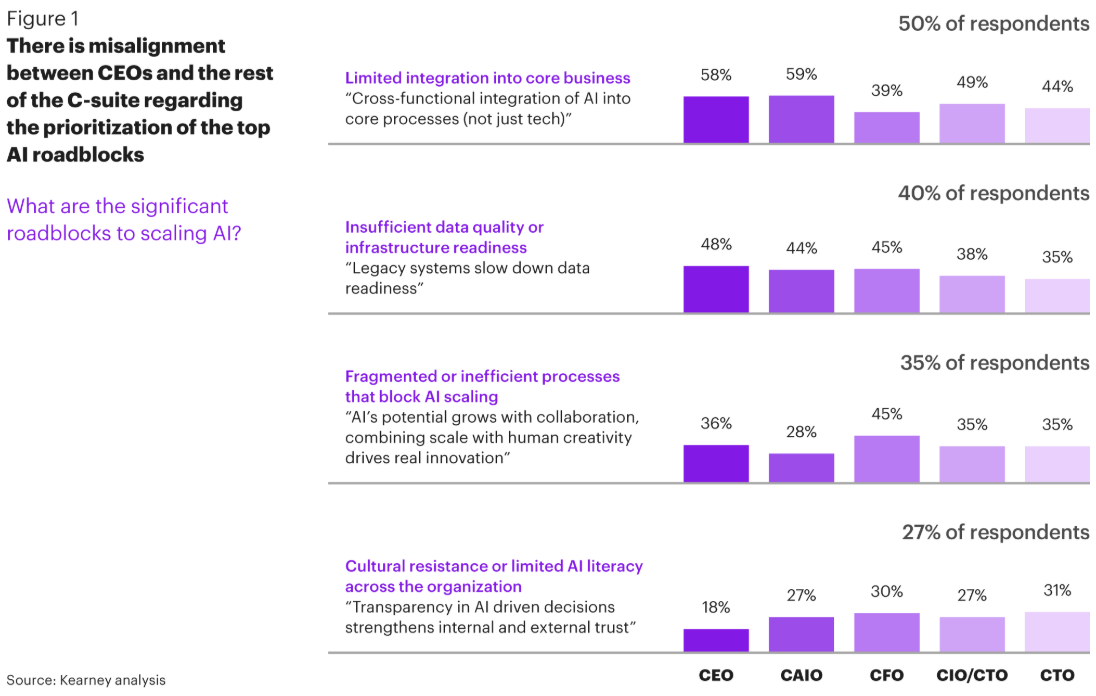
Image source: Kearney
Brief: Kearney surveyed more than 500 C-suite leaders across 16 industries, finding that the challenge of scaling AI and capturing value is less about technology and more about ownership, governance, and business design.
Breakdown:
Eight in ten AI projects fail to deliver, nearly half of POCs never reach production, and abandonment rates have doubled.
The study reveals sharp C-suite divides, with CXOs ranking AI challenges differently, exposing fragmented views (image above).
Executives disagree on ownership and strategy, debating efficiency versus innovation, and culture’s role in AI success.
Misalignment runs deeper, with conflicting views on integration and ROI barriers, leaving firms stuck in pilots without discipline to scale.
Why it’s important: Leading organizations align ownership, invest in data, processes, and governance, and embed AI into workflows. Those treating AI as transformation, not technology, are closing the gap between promise and impact.
AI-NATIVE PROFESSIONAL
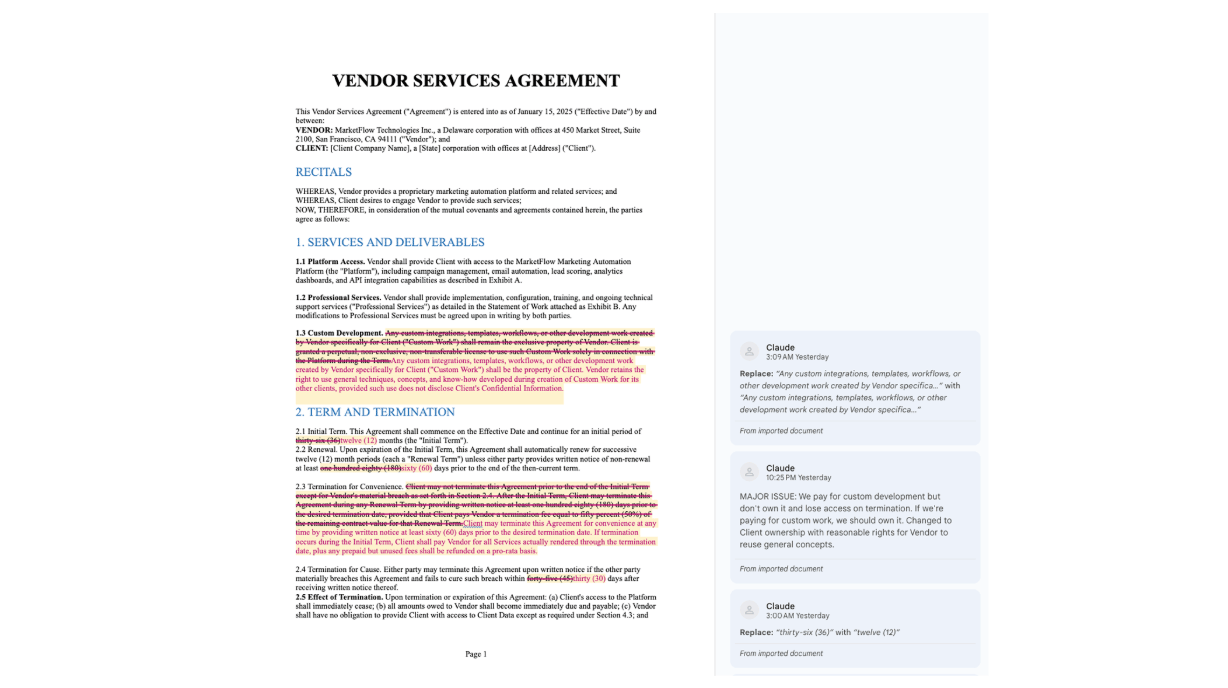
Brief: In this guide, you'll learn to use Claude to analyze agreements, identify terms affecting your work, and generate redlines with clear explanations to support more informed and confident negotiation outcomes.
Step-by-step:
Claude interprets contract terms and business implications, flagging risks, suggesting protective edits, and explaining impact.
Provide your business context and the contract for review so Claude can prioritize relevant terms, assess risk, and tailor recommendations.
Claude produces a redlined contract with margin comments, outlining what to change and why, similar to a legal team review.
Ask Claude to translate edits into a negotiation approach and generate a comparison table summarizing proposed changes.
Best practice: Request redlined documents with tracked changes, improve recommendations with more context, and use Projects for consistency.
For the full guide, upgrade to Executive+ or The Boardroom. New guides in each edition to help you become AI-native.
BEST PRACTICE INSIGHT
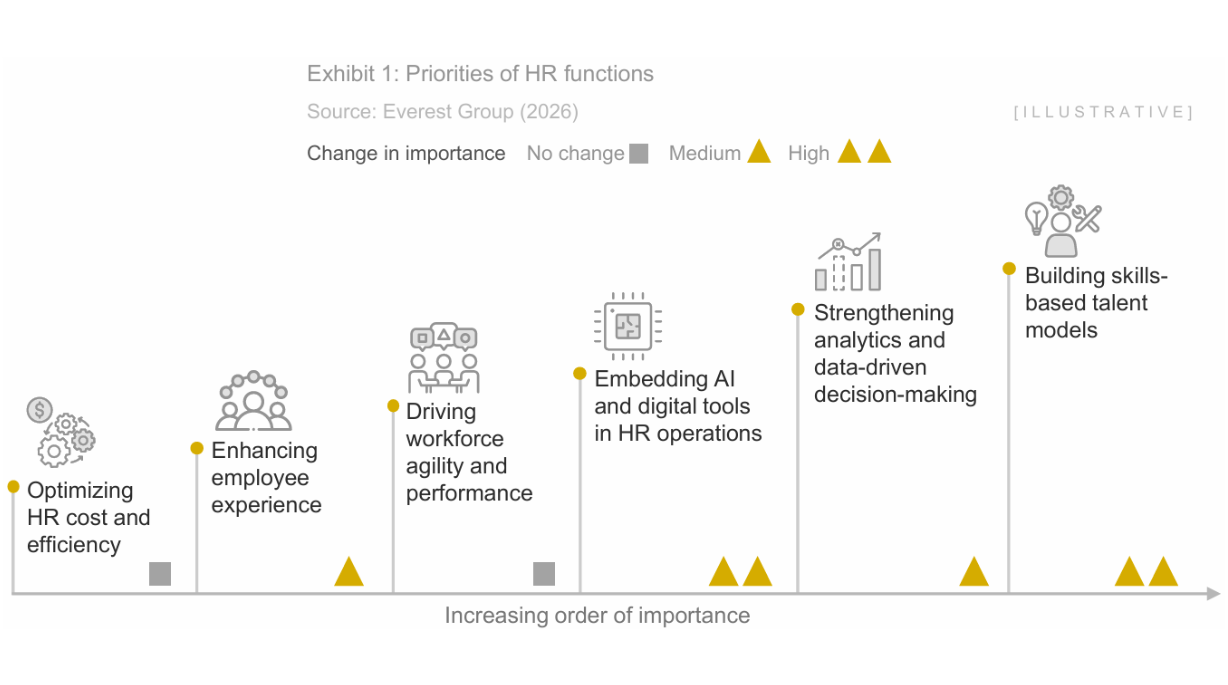
Image source: Everest Group
Brief: Everest Group, supported by Cognizant, outlined a roadmap for CHROs to navigate AI, showing how HR can evolve operating models, orchestrate ecosystems, and embed AI to deliver sustainable enterprise outcomes.
Breakdown:
Enterprises are piloting and scaling AI across HR, raising expectations for CHROs to drive productivity, and data-driven decisions.
Scale remains uneven, with AI in most HR functions still limited to discrete use cases rather than embedded across workflows.
Ownership and operating model gaps persist, with fragmented accountability and limited agility in centralized models.
Insight and governance gaps constrain progress, as low AI fluency, limited data use, and rising demands for trust hinder scale.
Why it’s important: Workforce strategy is becoming central to enterprise performance as AI reshapes how work is designed, governed, and executed. This shift is expanding the CHRO role from managing HR processes to orchestrating human and AI-enabled work at scale.

Cognizant released a deep dive explaining multi-agent systems, how they function, and real-world enterprise applications across industries.
Futurum Group published an 11-page report outlining five layers of the AI stack, a framework for policymakers, investors, and enterprise leaders.
WEF, with KPMG, published a 34-page report on AI for cybersecurity, stressing that effective defence requires strategy grounded in human oversight.
IDC, with SAP, explored how agentic AI is reshaping enterprise planning into a continuous, integrated, and data-driven business capability model.
Databricks shared a guide distinguishing agentic vs generative AI, focusing on autonomy, workflows, governance, and enterprise strategy.
RAND published a 20-page paper on AI contingency planning, focusing on preserving strategic optionality in future U.S.-China engagement scenarios.

Palantir and PayPal founder Peter Thiel led a $140M Series B in Panthalassa, valuing the ocean compute startup at nearly $1B.
Anthropic formed a Claude services company with Blackstone and Goldman Sachs, as OpenAI forms a PE-backed deployment entity.
The New York Times reports the White House is exploring a formal review and oversight process before companies publicly deploy AI models.
Sierra raised $950M at a $15B valuation, with its platform now serving over 40% of Fortune 50 firms for AI-driven customer experiences.
Anthropic is in talks to buy chips from Fractile, a London startup developing more efficient hardware for running and scaling AI models.
Harvard found that OpenAI’s o1-preview outperformed two physicians across 76 ER cases using only raw health record text.

Access Executive AI Index: The top 237 AI playbooks, by industry and function, with direct links to each. Updated weekly.
Unlock the full step-by-step guides in every Enterprise AI Executive edition to help you become AI-native.
Get the extended version of Enterprise AI Executive, delivered twice weekly.

CAREER OPPORTUNITIES
Cognizant - Agentic AI Director
Palo Alto Networks - AI Transformation Senior Director
Microsoft - AI Strategy Director
EVENTS
SAP Sapphire - May 11-13, 2026
Google I/O - May 19-20, 2026
Tech Week - May 26-31, 2026

Reach enterprise AI decision-makers:
66% of readers are C-level executives or VP and Director-level leaders.
63.2% of the audience is based in the U.S., EU, UK, ANZ, and Singapore.
Read by leaders at Microsoft, Deloitte, the Fortune 500, and more.
Guaranteed impression and custom sponsorship packages available, with post-send performance reporting.

The marketplace for trusted enterprise AI services, technology, and talent.
Transformation - Enterprise AI strategy, operating model, discovery, implementation, & managed services. Buy services. Sell services.
Technology - Enterprise AI technology from GPU providers and foundation models to agentic frameworks and beyond. Buy tech. Sell tech.
Talent - Executive and delivery talent, business and technical, from enterprise AI strategy to execution. Recruit Talent. Get Hired.

Conceived as a practical communication for executives Lewis Walker has worked with, this briefing has become a trusted resource for thousands of senior decision-makers shaping the future of enterprise AI.
We welcome your feedback.

Lewis, Ashley, Mark